
Cracking the Collectin Code
A Computational Framework for the Molecular Logic of Innate Immunity
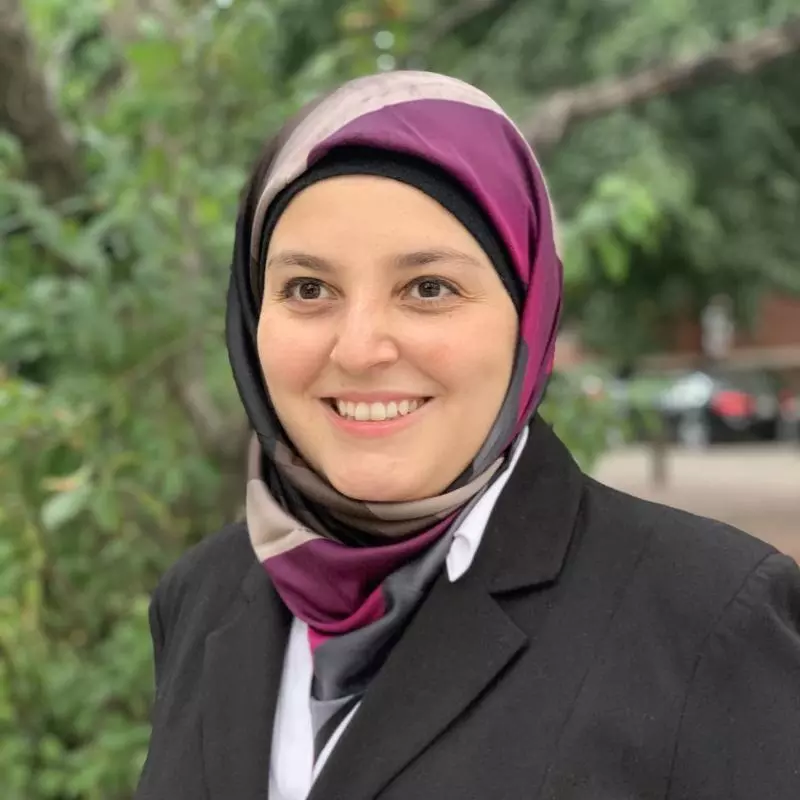
Dr Mona Minkara
Associate Professor of Bioengineering, Northeastern University
Date: 12 November 2026
Time: 11:00 - 12:00
Venue: Raymond Dwek Seminar Room, Dorothy Crowfoot Hodgkin Building, South Parks Road, OX1 3QU
Hosted by: Associate Professor Weston Struwe
Every breath we take brings potential threats such as viruses, bacteria, and fungi into contact with the body. Before the adaptive immune system is engaged, collectins are already at work: innate immune proteins that recognise glycans on pathogenic surfaces and help initiate immediate defense. Although humans express six collectins, the molecular rules by which they distinguish one glycan landscape from another remain largely unknown.
In this talk, I will present work from the Minkara COMBINE Lab aimed at decoding the molecular logic of innate immunity. We began with a deceptively simple question about the collectin surfactant protein D (SP-D): why do two point mutations dramatically enhance its binding to trimannose on influenza A virus? Through molecular simulations, we identified the mechanism underlying this enhanced binding. That mechanistic insight led to a broader question: if SP-D can be tuned in this way, what governs glycan recognition across the collectin family more generally?
To address this, we developed a scalable computational workflow that combines induced fit docking, MMGBSA ranking, binding pose metadynamics, and custom-built digital glycan libraries designed for pathogenic glycans. Using this framework, we identified primary and secondary amino acids that define the SP-D binding site and found that calcium chelation occupancy is a strong predictor of binding strength. We also examined a fundamental but underexplored question in computational studies of protein–glycan interactions: does the water model matter? By benchmarking five water models, we identified OPC as the model that best reproduces experimental binding trends in protein–glycan systems.
What began as a study of one collectin and one glycan has grown into a broader computational framework for cracking the molecular code of innate immunity. Ultimately, this work seeks to uncover how collectins recognize pathogenic glycans, why that recognition sometimes fails, and how these rules might be leveraged to understand and engineer early immune defense.
Dr Mona Minkara is an Associate Professor of Bioengineering and an Affiliated Faculty member in Chemistry and Chemical Biology at Northeastern University, where she directs the Minkara COMBINE Lab. She is currently a Visiting Researcher at the EGA Institute for Women's Health, University College London. Trained as a computational chemist, she studies how collectins recognise pathogenic glycans using molecular dynamics, Monte Carlo simulations, and free-energy methods. She earned her B.A. in Chemistry and Middle Eastern Studies from Wellesley College, her Ph.D. in Chemistry from the University of Florida's Quantum Theory Project, and completed postdoctoral research at the University of Minnesota's Chemical Theory Center. Her honors include a Sloan Research Fellowship in Chemistry, an NIH MIRA (R35), and an NSF CAREER Award. A blind scientist, she advances accessibility in science and is the founding director of the Academy of Blind Scientists.